Plant Collection
← Back
8d overdue
Lithops

Lithops

38 days ago

overdue by 8 days · Sep 16

Lithops spp.

✅ Safe for dogs

Non-toxic to dogs.

Acquired
July 15, 2026
Category
Succulent / Dry Crew
Care stage
🩹 Recovering
Plant state
🪴 Potted
Pot
9cm x 10cm terracotta
Soil
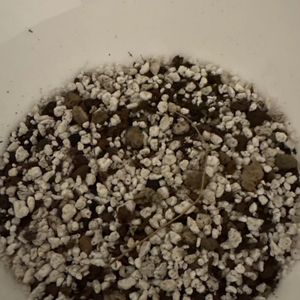
1 part zeolite : 1 part Gardners cactus substrate : 3 parts pumice : 2 parts lava (~86% mineral)
Light needs
🔆 Direct sun
Watering cue
Side-body deflation cue only, not by schedule; near-zero water during winter split cycle
Vacation safe
Yes, 2 weeks

Care notes

Next repot: spring, after complete split. Target mix ~80% pumice + lava (2–5mm), crushed keramzit, 10–15% antuka. No sand, no perlite.

Pot: 10–12cm minimum depth, narrow over wide. No fertilizer in the mix.

Journal

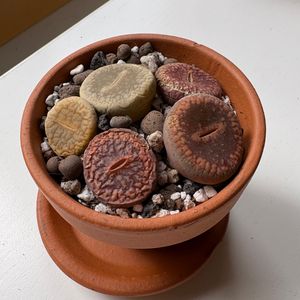
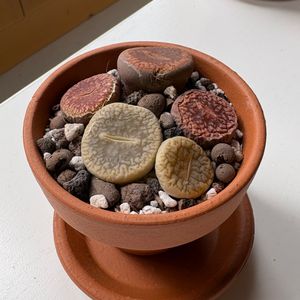
Repotted three survivors into 9cm terracotta with redesigned mix

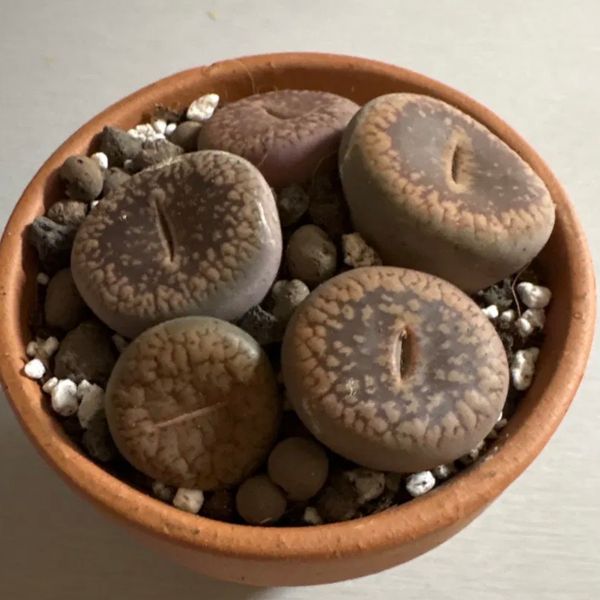
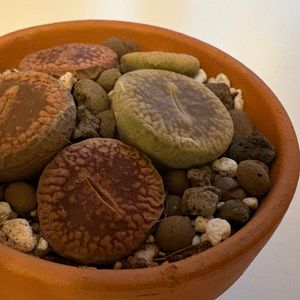
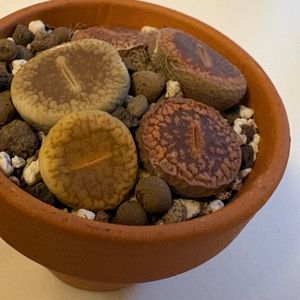
Done: the three survivors repotted into a 9cm x 10cm terracotta pot – next size up from the previous 6cm, giving the roots more depth.

Mix: 1 part zeolite : 1 part Gardners cactus substrate : 3 parts pumice : 2 parts lava, ~86% mineral, redesigned after the Jack rot incident to push grittier than the previous mix.

Done: potted dry, no water at potting. Holding until the next natural deflation cue.

Jack lost to rot – emergency uproot, three survivors bare-root pending repot

Observed: a soft, non-slimy but unresolving darker patch on one body (Jack), found after the 2026-08-17 watering.

Done: uprooted for inspection. Jack confirmed rotted, moved to a postmortem entry on the John & Jack record.

Done: cluster roots separated by hand to isolate Jack. The remaining three bodies' roots examined and found firm and healthy, no rot spread.

Next: three bodies bare-root, out of the pot. Pending a redesigned mineral mix and a larger terracotta pot for more root depth.

Watering – one body shriveling, watered on the deflation cue

Done: Watered 2026-08-17. Side deflation on the pale body was the trigger – the same presentation John showed before he was lost. Watered on the standing side-body deflation cue rather than the 30 day interval, consistent with the plan set on 08-05.

Method: Watered the grit from above around the bodies, then bottom soaked. First full soak this pot has had since acquisition – the 08-06 watering was a targeted 3 to 5 ml at the surface, which likely never reached the root zone.

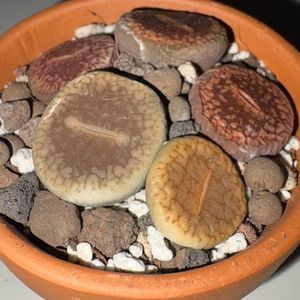
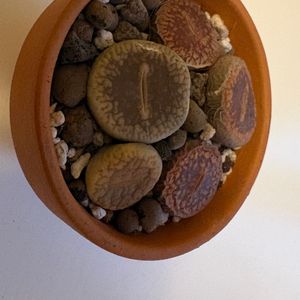
Observed: Pale body deflated at the sides. Reds wrinkled at the sides as well. All four bodies now show flank deflation, where the 08-03 and 08-05 logs had the pale bodies holding fuller than the reds. Viewed from above the top faces still read full and smooth with no deep pleating. No soft spots, no translucent or amber patches, no rot signals. Gritty mix and top dressing bone dry before watering, no salt crusting.

Fissures: A narrow pale sliver sits in the fissure of at least three bodies – the dusky pink, the tan, and the small red. Too undeveloped to call a bud or a new leaf pair either way. Watch over the next 1–2 weeks.

Watch: Turgor response in the flanks over 5–7 days. A full soak reaching the root zone is the strongest signal available – if the flanks do not refill after this one, the shared root system is not functioning and that is a different problem from thirst. Watering stays on the deflation cue.

John lost to desiccation - isolated root system, no viable tissue found

John - the small green body on his own root system, separate from the other four - pulled and examined. Body fully collapsed, papery, no green or firm tissue anywhere. No rot smell.

Roots examined: thin, uniformly brown and dry along their full length, no pale or firm living tips. No viable root tissue found.

Cause: desiccation. Johns independent root system likely failed to reestablish after the 2026-07-15 bare-root repot, compounded by the 2026-07-30 heat stress episode. The targeted ~3-5 ml watering on 2026-08-06 showed no recovery response before he was pulled.

Water therapy attempted as a near-zero-odds last resort - roots suspended in Lignohumat (chosen over willow water for its stronger effect), body propped clear of the waterline. No expectation of recovery given the condition of the roots on pulling, but low cost to try in isolation.

Separated from the pot - no rot risk to the other four bodies, which remain on their own shared root system and are recovering normally. No change to the clusters careStage or status.

First water since acquisition – ~3–5 ml distilled at the softening green body

Small green body more collapsed than on 08-05 and felt softer than the other four. Checked the base at the grit line – firm and dry, no translucent or amber patches, no give – so desiccation rather than rot.

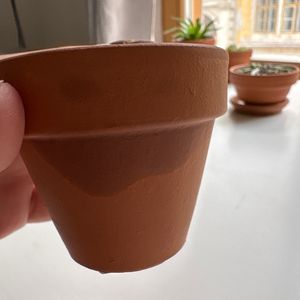
Gave ~3–5 ml distilled water at the grit surface beside that body rather than a soak, to avoid handing a full drink to the four that did not need one. No willow water, no fertilizer. Terracotta darkened on the outside of the pot on that side, confirming the water traveled down through the grit.

Watch next: turgor response in that body over 3–5 days; any new translucent or amber patches, pull it if they appear; new leaf tips in any of the five fissures. Watering stays on the side-body deflation cue, not the 30 day interval.

Reds still wrinkled; one dipping centrally; smallest pale body deflated at sides but firm

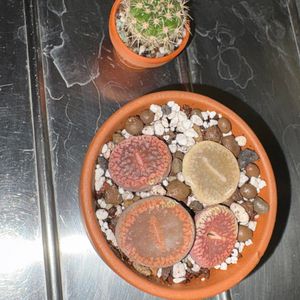
Reds remain most wrinkled around the shoulder. One has started dipping centrally – consistent with the fissure watched since 08-03, more visible today.

Smallest pale body deflated at the sides, still firm on top, no soft spots. Bigger pale body and raised reds looking best of the group.

No water given, no rot signals. Plan revised: dropping the fixed no-water-until-September cutoff in favor of daily reassessment, per the standing side-body deflation cue rather than a calendar date. Trigger to water is firmness declining or new leaf tips appearing, not elapsed time.

Reds most retracted; pale bodies holding fuller

Reds show the most wrinkling, concentrated around the top shoulder, and sit most retracted into the grit – driest-looking of the group. Pale bodies read fuller and smoother by comparison.

Reds have been the drier pair throughout.

All five bodies present and accounted for. No soft spots, no translucent or dark patches, no rot signals. Gritty mix surface bone dry, no salt crusting on the zeolite top dressing.

Fissures visible on at least three bodies, closed or barely parted, no new leaf tips. The reddish center body has the most open fissure with a faint lighter sliver inside – watching against the flower bud anticipated 07-30.

Short exposed neck on the top body unchanged.

Fine tan filaments across one body – most likely dried fiber or mix debris, same category as the white specks ruled out on 07-30. Check in daylight to rule out webbing.

No water given. Plan unchanged – no water until September, daily morning firmness check.

Still deflated 3 days on; moved out of scorching sun

Bodies still wrinkled and creased across all five, most pronounced on the reds. No plumping yet since the 2026-07-30 heat stress episode.

Fissures closed, no new leaf tips visible – this is continued dehydration from the heat, not the start of a split. One reddish body sitting up on a short exposed neck.

Moved out of scorching direct sun, kept in bright light. Gritty mix and zeolite top dressing look right, saucer dry.

2026-08-01: a trace of distilled water splashed into the bottom of the terracotta, hoping for slight wicking to the roots. Amount was a single drop – almost certainly not enough for the plant to register. Logged here rather than as a watering entry on purpose, so the watering status stays honest.

Side-by-side against the 2026-07-30 photos: flank pleating looks slightly shallower now and the pale specimen marginally less creased. Improvement is real but very slow – consistent with roots still reestablishing. No change to plan: no water until September, daily morning firmness check.

Heat stress + deflation episode

Accidentally left on an outdoor windowsill during a 36°C heatwave. Small terracotta in direct sun puts root zone well above air temperature – roots stop functioning.

Diagnosis: deflation was heat stress + post-repot root disruption, not sunburn or thirst. Bare-rooted at repot means torn root hairs that cannot absorb regardless of soil moisture. The rust/red coloration is natural anthocyanin blushing, not sunburn.

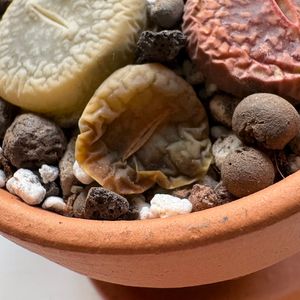
Observations from photos: top faces flat to slightly domed, flanks visibly pleated in side view; one fissure clearly open (new leaf pair or flower bud, unidentified); reds more deflated than the pale specimen; papery remnant near the back is an old leaf pair from a previous split, harmless; white specks near a fissure confirmed as mix remnants, not pests.

Current strategy: no water until September. Monitoring daily – morning firmness check before sun exposure. Still hard and firm = good.

Watch: recovery may lag any future watering by 2 weeks or more while roots reestablish. Open fissure expected to be a flower bud – watch for it to develop and open in September.

Acquired + immediate repot

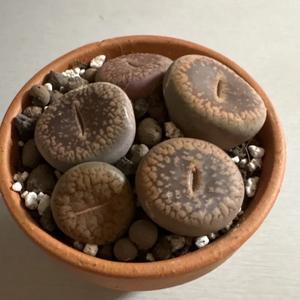
Acquired same day as original Diego (Mammillaria). Repotted immediately into 85–90% gritty mix. Not watered post-repot – standard lithops protocol, letting settle dry.

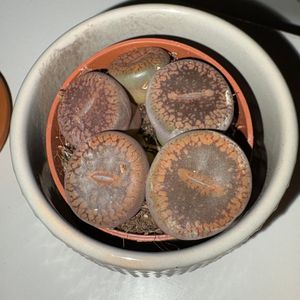
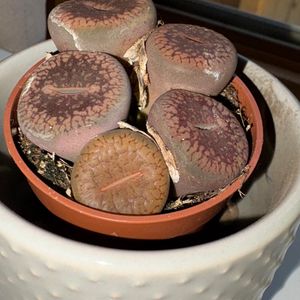
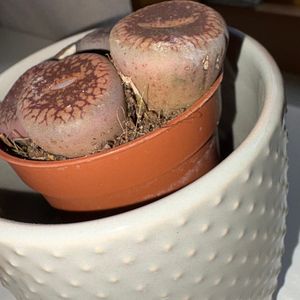
Photo order: the first three show the plant as bought, still in its original nursery pot with a dark organic medium and old papery leaf pairs at the base. The fourth is the gritty mix prepared for the repot. The fifth is the finished repot in terracotta.